Success comes in many forms. It’s not just startups that are conquering the market with innovative ideas, but also individuals who choose to change the world around them, whether they are entrepreneurs, scientists, students, or philanthropists. Sometimes all it takes is a bold idea, other times it takes years of persistent work. But they have one thing in common – they don’t give up, they look for new ways and push the boundaries of possibility with their efforts. In our section Paths of Success, we give space to these people who have a vision and the courage to make it happen, even if the path to the goal is not always easy.
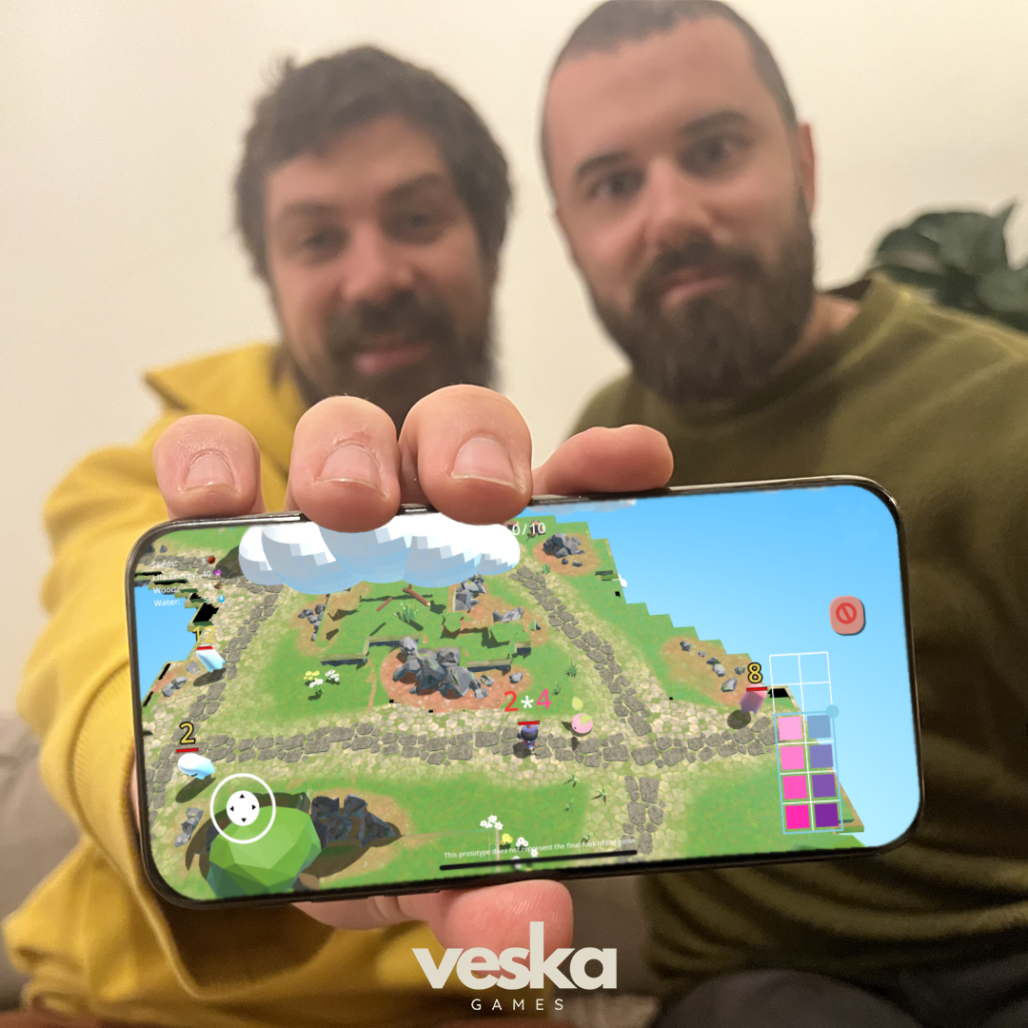
In today’s digital age, when kids spend a lot of time on their mobile phones, it’s hard to find a way to use that time in a meaningful way. What if mobile games, instead of just wasting time, could educate and entertain at the same time? The two dads behind the startup Veska Games wondered the same thing. What was behind the birth of their educational game for kids? What challenges did they have to overcome in its development? And what are their next plans? Find out in our interview with founder Jakub Douck, who won 3rd place in the national round of the Creative Business Cup 2025 competition a few weeks ago with his co-founder Jakub Stránský.
1) Jakub, what moment in your personal life or career led you to decide to pursue the development of educational games for children?
In my case, it wasn’t one specific moment, but rather a gradual journey. When I think back on it, my whole life has been gradually moving towards this. Ever since I was a kid, I wanted to make games – and I went for it. In second grade, I programmed my first experiments in my spare time, back then in Baltik – a program that probably nobody knows anymore. I was lucky that my dad was an IT guy, so we had a computer at home, and that passion lasted. While I was still in college, I started working as a developer at a video game company. At the same time, I come from a family of teachers – my grandmother in particular was a big influence on me in that way. She taught all her life, and she was totally dedicated to it. The big milestone was, of course, my own children. With them, you start to see the world in a completely different way. And when they got a little older, I started to think about what makes my working life meaningful. In the meantime, I met Cuba, who became a great friend.
An important turning point came when my children started to choose what to play on the computer and phone. I’m an IT guy and a geek, so they’ve had a tablet in their hands since they were young, but we tried to set reasonable boundaries and choose carefully what we offered them. It’s pretty easy for young kids to find nice games that develop them – just pretty pictures and animations and they’ll be quietly tracing letters or identifying squares and triangles for days. But later on, it completely turns around. Children’s attention starts to be absorbed by YouTube videos, social networks, shorts, reels, TikTok and free-to-play games whose main goal is to get as much money out of the player as possible – using manipulative techniques, premium currencies, short dopamine cycles, etc. And even when we have clear rules at home and try to talk to our kids about why we have them, the pressure from them is sometimes hard to take – “others can, why can’t I”, “dad, this YouTuber is cool, grandpa talks dirty too”, “why don’t you buy me a thousand diamonds, they’re on sale now – and it’s my money anyway”. Another crumb was added when we started looking for nice apps for the kids to help them with school.
And multiplication tables, for example, always seemed like the perfect topic – after all, there are so many game mechanics to come up with! There are various browser games and a couple of learning apps on mobile, but for kids it’s still just “learning” – just packaged a little differently. So I made a game for my kids. It went through several iterations and it worked. They played it not out of obligation, but for fun. After all, if I had to pick a specific moment, it was right there. The moment when it all came together and I thought: “Yeah. This makes sense. I’m going to make this into a successful educational game – and then lots more!” And of course I went straight to Cuba with it. 🙂
2) What were your biggest fears or doubts when you first started?
I had a lot of fears and doubts. Of course, one also has to deal with the financial aspect – not to put the family at risk. But the biggest challenge for me was the fact that you are bringing something of your own, original work into the world. You’re revealing a piece of yourself. And you have a lot of doubts running around in your head. You have to find the strength within yourself to shake them off the table, stand up in front of people, stand behind what you’ve created, and be able to sell it with confidence. What spurs me on in this is the deeper meaning and vision that we have. If it was just about starting a business, I wouldn’t be in it. Knowing that we are working on something that can show a new way in education and help a lot of people is what drives me forward.
3) What does success in Creative Business Cup 2025 mean to you?
I’ll follow up on my previous answer – for me it’s confirmation that we’re not just kidding ourselves. That we’re actually doing something of value. People appreciate it and see the potential in it, just like we do. I’m very happy about that. Being in the CBC, to me, is confirmation that we’re moving in the right direction. It’s a great motivation, but we’re still at the beginning. There’s still a lot of work to do – so we keep going and don’t let up. 🙂
4) Is there anything you would change and tell your “younger and inexperienced” self?
Honestly? Probably not. I don’t feel like I have to tell my younger self anything. For one thing, he wouldn’t listen to me anyway – and even if he did, he probably wouldn’t understand. Life has to be lived. And not knowing how things will turn out is what makes it such an adventure.
Thank you so much, and good luck!
source: Veska Games