- Czech startups see the biggest barriers to their growth in the tax and administrative burden, problematic labour relations and lack of capital.
- A third of startups are therefore considering moving their headquarters abroad or have already done so.
- This was shown in a unique survey of 222 Czech startups and investors.
- The survey was conducted in early September in cooperation with the Czech Startup Association, CzechInvest, the Ministry of Industry and Trade and the Office of the Government. The data analysis was prepared by Lakmoos AI.
- The collected data serves as one of the key bases for the preparation of the analysis of the startup environment, which is the basis for the preparation of the RIA and subsequently proposals for possible legislative solutions for the rapid implementation of changes by the new government.
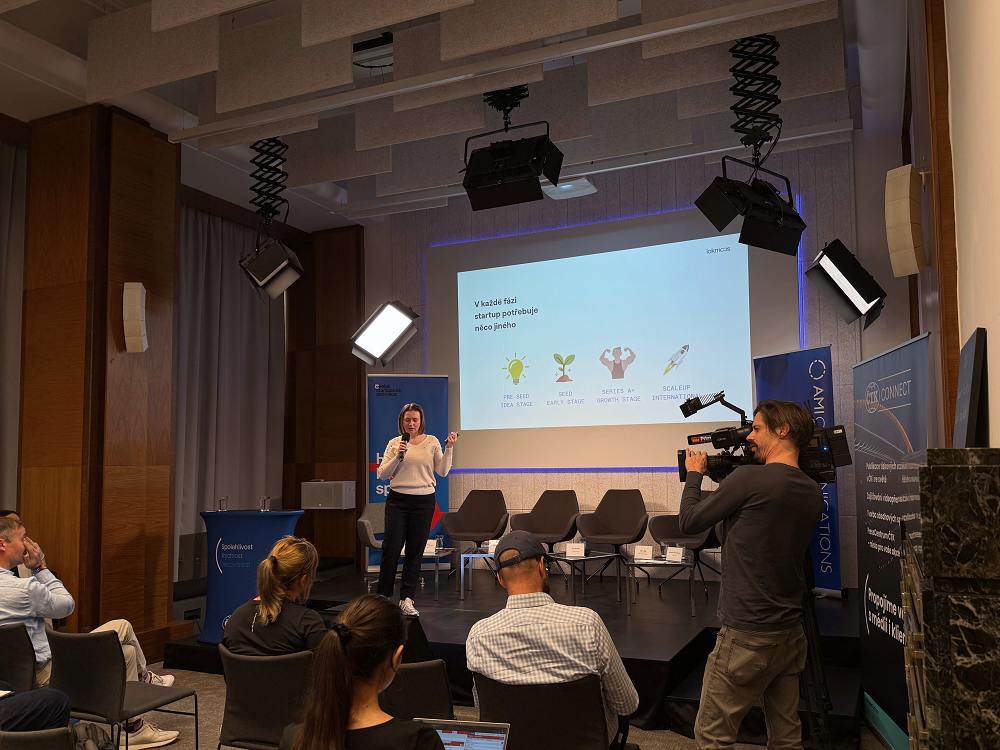
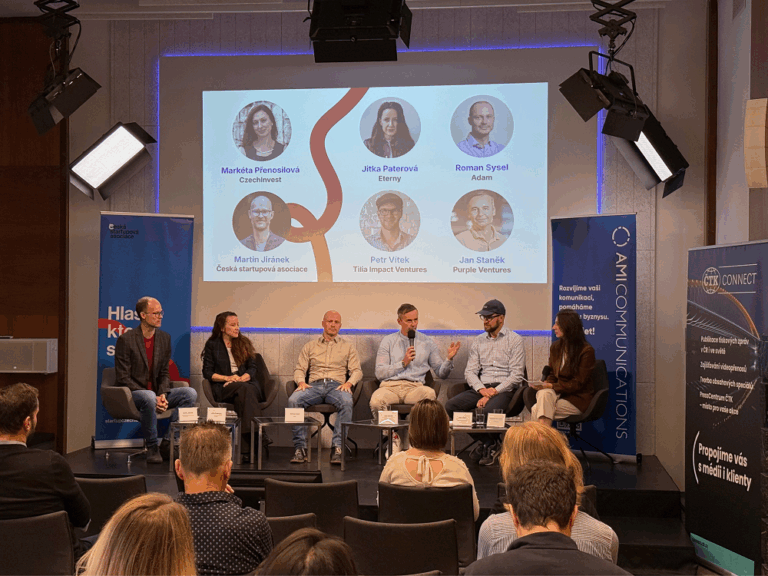
Prague, 20 October 2025 – The most significant barriers to the development of Czech startups are the tax burden, administration and regulation, and labour relations issues. A third of startups are therefore considering moving their headquarters abroad or have already done so. This was shown in a unique survey among 222 Czech startups and investors, presented by representatives of the organizers of the survey: the Czech Startup Association, the Ministry of Industry and Trade and CzechInvest.
Tax burden is a significant barrier for 72% of respondents. The most frequently mentioned was labour taxation together with high levies, which is a problem especially for early-stage startups. The second biggest barrier (64%) is administration and regulation, especially topics related to the lack of digitalization of the government, complex accounting and reporting for government needs.
Legislation related to the labour agenda and the lack of qualified specialists is also a complex obstacle to development, perceived as such by 61% of respondents. These include legal uncertainty when working with self-employed persons (self-employed), complicated and lengthy visa processing for foreign workers and the lack of qualified workforce outside of Prague and Brno. Access to capital (59%) was another barrier identified by startups, who cited the financially weaker VC ecosystem in the Czech Republic, the low risk appetite of Czech investors, or multiply lower investments at various stages of startup development compared to the situation in countries such as the US, UK or Germany.
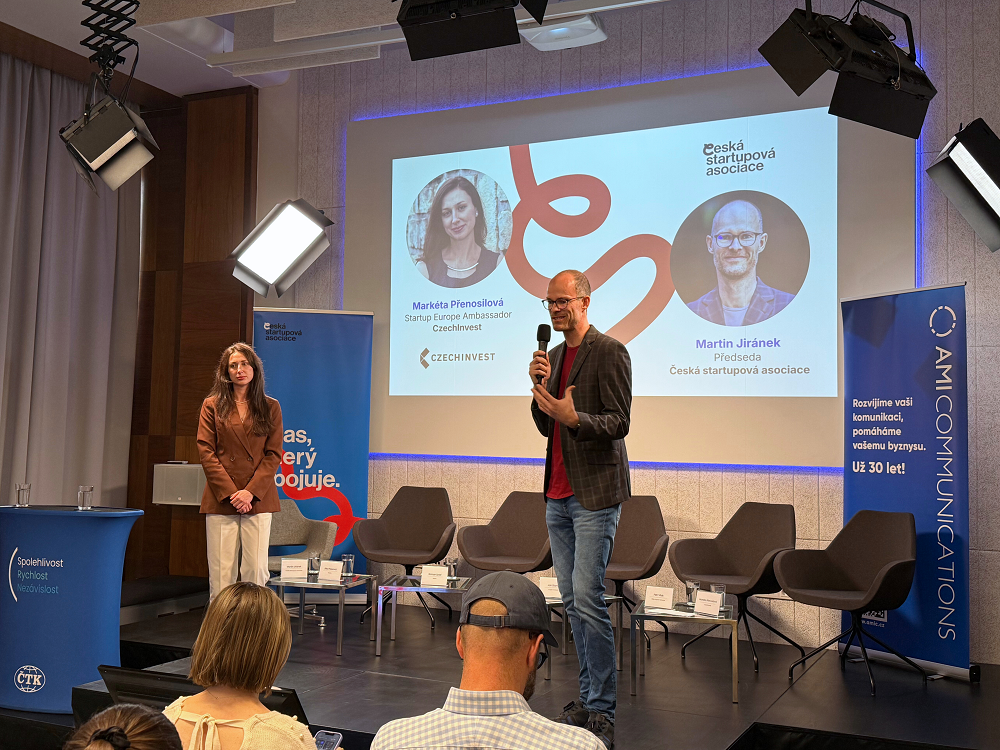
Martin Jiránek | Chairman of the Czech Startup Association
“The results of the survey clearly show the areas where startups perceive obstacles and barriers to their business, as well as those where the Czech environment works well. Thus, we have a broad sample of respondents to confirm what we should focus on with the new government to bring the quality of the Czech startup environment out of the European bottom rungs and into the top countries. The next step is to name these main topics in the Government Programme Statement and in the meantime prepare details of possible solutions. We are already working with our partners so that the new government can start implementing the changes as quickly as possible.”
Markéta Přenosilová | Startup Europe Ambassador, CzechInvest
“We see the fact that startups have openly named the barriers to their development as an opportunity, not a problem. They confirmed our previous assumptions about the areas where the Czech innovation environment needs changes. Thanks to this data, together with our ecosystem partners, we can systematically remove barriers to innovation growth and bring conditions in the Czech Republic closer to the standards of the most advanced European economies. The finding that a third of startups are considering moving abroad is a clear signal of the need to modernise the tax and legal framework. The recent approval of employee share schemes is proof that change is possible. We want to build on this success by removing further barriers through the Startup Act, which will offer modern and competitive conditions for the development of innovation in the Czech Republic.”
A third of Czech startups are actively considering moving their headquarters abroad or have already done so: almost 6% have already moved and almost 25% are seriously considering it. Another 42% of startups are open to the possibility. Only about a quarter of startups (28%) want to remain based in the Czech Republic. The primary motives for relocation are tax burden, inability to effectively use ESOPs and distrust of foreign investors in the Czech legal framework.
In the case of employee shares, conditions will improve as early as January 2026, when changes under the Uniform Monthly Employer Reporting Act will come into force and Czech startups will be able to better motivate and reward their employees.
The survey clearly shows that Czech startups need more than just partial adjustments – they are crying out for systemic changes that will allow them to grow at home, not look elsewhere for opportunities. Although the ESOP regulations were finalized this year, major challenges remain, especially in the areas of tax burden, cooperation with self-employed entrepreneurs and hiring foreign experts.
The survey was part of an analysis of the startup environment published by the MIT in September and co-authored by the Office of the Government, CzechInvest and the Czech Startup Association. Based on this analysis, a Regulatory Impact Assessment (RIA) is currently being prepared for the preparation of the Startup Act. In parallel, further discussions and analyses are taking place within the Coordinating Council for Investors and Startups (KRIS), including the introduction of ESNA Startup Standards and the so-called 28th regime at European level, which could bring greater competitiveness for Czech companies.
Štěpán Hofman | Deputy Minister, Ministry of Industry and Trade
“The conducted survey confirmed the existence of obstacles and barriers in the Czech startup environment, which we have also identified in the overall analysis of this sector. I am so glad that we have managed to start the process of creating a new startup law, which aims to remove the most important barriers and move the Czech economy towards greater competitiveness and innovation.”
Kamila Zahradníčková | co-founder and CEO of Lakmoos AI
“The topic of startup churn is close to our hearts. We are dealing with similar issues, but also most of the founders in our area. Sooner or later, every successful startup reaches a point where it has to consider where its growth makes the most sense – and often it is outside the Czech Republic. Unless the environment here fundamentally changes, it’s a natural move for many companies, not an escape.”
Jitka Paterová | Founder and CEO of Eterna
“The tax and administrative burden takes away the space for development and investment, which brings new services and greater competitiveness. Just explaining to the tax authorities what software development entails or how intangible assets work is often very challenging. In fintech, this is compounded by regulation and slow processes, even as demand for digital services continues to grow. Above all, innovation needs flexibility, pilots and real support, not more paperwork.”
Karel Havlíček | Deputy Chairman of ANO
“For the further improvement of the startup environment, exactly such feedback is crucial. We already have some of the areas mentioned – the need to strengthen venture capital, simplify cooperation with self-employed people, reduce red tape and further improve ESOPs – in our economic strategy. As soon as the government is appointed, we will start working on them. The Czech Republic is far below its potential in terms of the size and development of the startup sector and our society is unnecessarily losing talent, innovation and profit.”
The top-ranked area in the survey was ‘Network and ecosystem support’. Two-thirds of respondents (66%) say that these topics hold them back little or nothing. For example, they rate positively the sharing of experiences among founders, available mentoring, quality IT talent and a strong foundation in technology. In the overall assessment, the Czech startup environment earned an average score of 3.2.
The 222 online respondents included startups from a variety of industries, with AI & Data, Industry & Manufacturing and Software Infrastructure being the most common. Data collection ran from August 27 to September 14, 2025, and focused on six main areas: Administration & Regulation, Tax & Cost, Access to Capital & Funding, People & Labor Relations, Network & Ecosystem Support , and International Expansion. Startups were approached to participate in the survey directly by the survey organisers and also through venture capital funds, business accelerators and innovation centres.
The partners presenting the survey results are CTK Connect and AMI Communications.
Detailed survey results can be found here. (in Czech)
source: original article in Czech – AMI